
How many restrooms does a race in Sandy need?
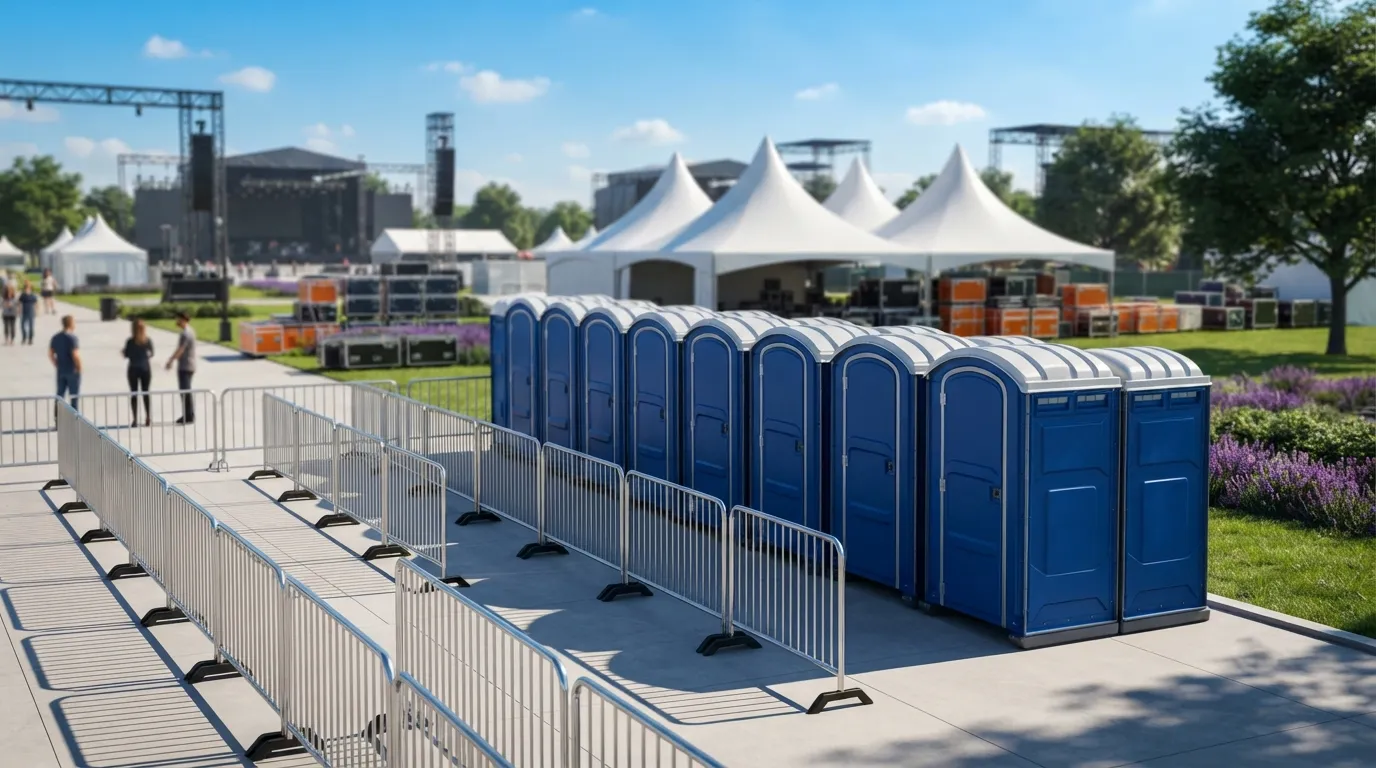
Start with the corral. A road race with 800 runners staged in one spot needs more units bunched together than the same field spread across a looped course with three aid stations. Our placement guide walks through spacing, but the short version: cluster 6 to 10 standard units at the start line, then drop 1 or 2 at each aid station past mile 3. ANSI/PSAI Z4.3 sets the baseline service interval at once a week for up to 10 users over a 40 hour week, which tells you units at a race need extra service, not the standard schedule, because a few thousand runners hit them in under three hours. Races staged near Sandy often pull from Murray, 7.6 miles north, or South Jordan, 8.3 miles west, so build in enough units that out-of-town runners aren't hunting for a line. If your race qualifies as a public accommodation, ADA Standards section 213.2 requires that at least 5 percent of clustered units be accessible, never fewer than one, so plan for at least one ADA accessible porta potty at the start and one at the far turnaround. Add a handwashing station next to any fuel or gel table, since sticky hands and portable toilets do not mix well at mile 18.
What does race restroom rental cost in Sandy?
Race pricing runs on an event rate, not a straight daily one, because setup, service mid-race and teardown all happen inside a single day.
| unit | typical range | notes |
|---|---|---|
| standard unit, event rate | $200 to $800 | covers a single race day, delivery to teardown |
| ADA unit, day rate | $200 to $400 | add per accessible station required |
| delivery fee | $100 to $500 | distance and access dependent |
| service fee | $100 to $300 | mid-race pump-out if the field is large |
A weekend race, where units sit Friday through Sunday for packet pickup and a Monday teardown, runs closer to a weekend rate than a single event day, so tell us the full footprint when you request a quote. Races with an expo tent or a beer garden after the finish sometimes add a deluxe flushable unit near VIP or sponsor areas. Larger events with a finish line festival look more like a festival restroom rental than a straight race, and pricing shifts accordingly. If the course crosses into Millcreek, 9.9 miles north of Sandy, or up toward Taylorsville, 10.4 miles northwest, factor that mileage into the delivery quote since a longer haul changes the fee band.
How do we power the finish line and timing tent?
Most finish lines need light and power before they need anything else. A 200 amp temporary power pole handles timing equipment, a PA system and a couple of light towers without tripping breakers mid-race. OSHA 1926.404(b)(1)(ii) requires ground fault circuit interrupter protection on temporary power at a work site, and a race finish line counts. If you're running a pole for an early-morning or after-dark event, pair it with a light tower rental so volunteers can see the timing mats and the last finishers can see the chute.
How to brace a temporary power pole matters more than people expect on a Sandy race weekend, where wind off the foothills can rock a loose pole enough to shift a breaker box. Set the base on stable, firm ground per ADA Standards section 302.1's surface standard, even if the pole itself isn't part of an accessible route, because a wobbly base is a hazard for everyone walking past it. Anchor the pole with guy wire staked well clear of the runner lane, and keep the panel door swinging free rather than facing into foot traffic. Barricades used to keep runners and volunteers clear of the pole should meet ANSI D6.1 per OSHA 1926.202. If your race needs a fenced corral or a controlled finish chute, a temporary fence rental or crowd control barrier rental does that job better than cones.
For a race with a sponsor village or a VIP tent, a restroom trailer rental upgrades the experience past a standard unit row. A 2 stall restroom trailer fits tight footprints near a finish arch, while an 8 stall restroom trailer handles a bigger post-race crowd in Sandy without long lines. Whatever the course looks like, construction site services crews and race organizers both call us for the same reason: nobody wants to explain a line of 40 people to a race director an hour before gun time.
How far in advance should we book race restrooms?
Book 4 to 6 weeks out for a standard race, longer if you need multiple ADA units or a restroom trailer. Spring and fall are Sandy's busiest race months, and unit availability tightens fast once local calendars fill.
Do we need accessible units at a race start line?
Yes, if the event is open to the public. ADA Standards section 213.2 requires at least 5 percent of clustered units be accessible, with a minimum of one, positioned on a route meeting the 36 inch clearance in section 403.5.1.
Can units be moved along the course mid-race?
No, units get placed before the race starts and stay put. Aid station units are set at fixed mile markers so course marshals and runners always know where to find them.
What about restrooms for a race expo the day before?
Treat the expo like a separate short event. A weekend rate covers Friday setup through Sunday teardown, cheaper per day than booking two single-day event rates back to back.
Do we need handwashing stations at aid stations?
Yes, especially anywhere runners handle gels, fuel or shared water cups. 29 CFR 1910.141(d)(2) requires soap and towels or a hand-drying device at any handwashing setup, not sanitizer alone.
Next step
Get a delivery date
Tell us the address, the dates and the headcount. We size the order and confirm the route.