
How Many Porta Potties Do I Need for a Construction Site?
OSHA 1926.51(c) sets the baseline: 1 toilet seat for 20 workers or fewer, then 1 toilet seat plus 1 urinal per 40 workers once you pass 20, and 1 seat plus 1 urinal per 50 workers at 200 or more. A framing crew of 15 in Sandy needs just 1 standard porta potty rental. A 60-person crew falls into the 40-worker bracket, which usually means 2 units. Most jobsites in Sandy add one more for wash-up if painting, coatings, herbicides or insecticides are part of the scope, since OSHA 1926.51(f)(1) requires washing facilities in those specific cases. General jobsite sanitation, by contrast, is covered under 1926.51(c) and doesn't require handwashing unless that contaminant work is happening. Pair your count with a handwashing station rental to stay ahead of both rules. For multi-trade sites running six months or longer, check the monthly porta potty rental option in Sandy rather than renewing weekly. If your crew works a rotating schedule across Murray, 7.6 miles north, factor in that OSHA's bracket table is based on workers per shift, not total headcount for the week.
How Many Porta Potties Do I Need for an Event?
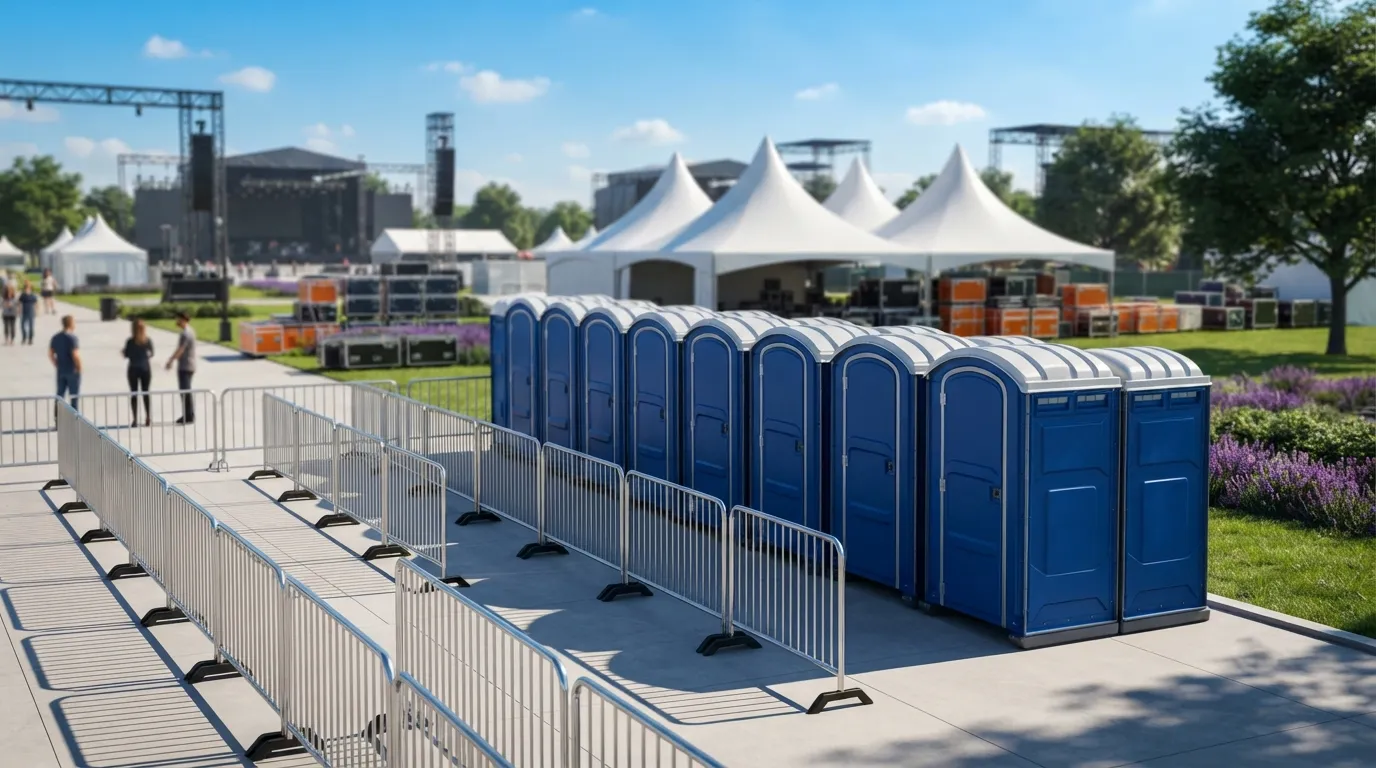
Events scale differently than jobsites because people show up in bursts, not shifts. A safe planning number is 1 unit per 50 guests for a four-hour event without alcohol; add units as hours or drinking increase. Here's a rough table for a single-day event in Sandy:
| Guests | Hours | Units (no alcohol) | Units (with alcohol) |
|---|---|---|---|
| 50 | 4 | 1 | 2 |
| 100 | 4 | 2 | 3 |
| 250 | 6 | 5 | 7 |
| 500 | 8 | 10 | 13 |
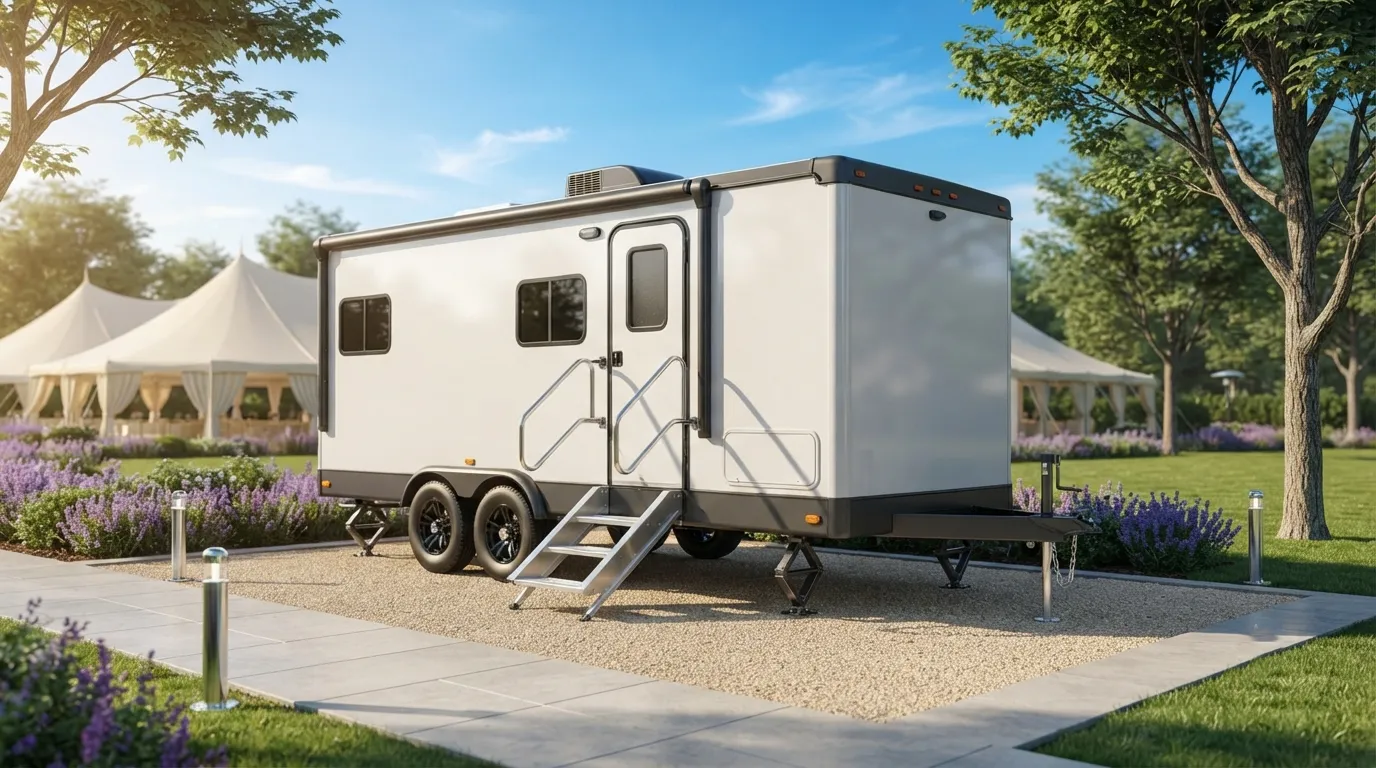
Alcohol adds roughly 20 to 30 percent more units because it increases both frequency of use and dwell time. A wedding reception running past dark should also look at a luxury restroom trailer instead of stacking standard units. For festivals or fairs that run two or three days, don't just multiply the daily number; instead check the porta potty rental per day pricing against a multi-day weekend rate, since servicing frequency, not just unit count, is what keeps a long event clean. Race organizers planning a marathon and race restrooms layout should space units along the course rather than clustering them at the finish line.
What Adjustments Should I Make for Alcohol and Multi-Day Events?
Alcohol service pushes usage up fast, so plan for at least one extra unit per 100 guests once a bar opens. Multi-day events need daily servicing built into the quote, not a single drop-off. A three-day county fair restrooms setup in Sandy, for example, should schedule at least one service visit per day per cluster of units, well above the baseline visit interval described in ANSI/PSAI Z4.3 for lighter office-style use. If your event includes food vendors using fryers or grills, pair your restroom count with a grease trap pumping plan so grease waste doesn't become a separate emergency call.
How Do I Size Units for a Jobsite Bracket Range?
The OSHA bracket table works in steps, not a straight ratio, so a crew of 21 doesn't need dramatically more than a crew of 20. Here's how Sandy job sizes typically shake out:
| Crew size | OSHA bracket | Typical unit count |
|---|---|---|
| 1-20 | 1 toilet | 1 |
| 21-60 | 1 seat + 1 urinal per 40 | 2 |
| 61-100 | 1 seat + 1 urinal per 40 | 3 |
| 200+ | 1 seat + 1 urinal per 50 | 4 or more |
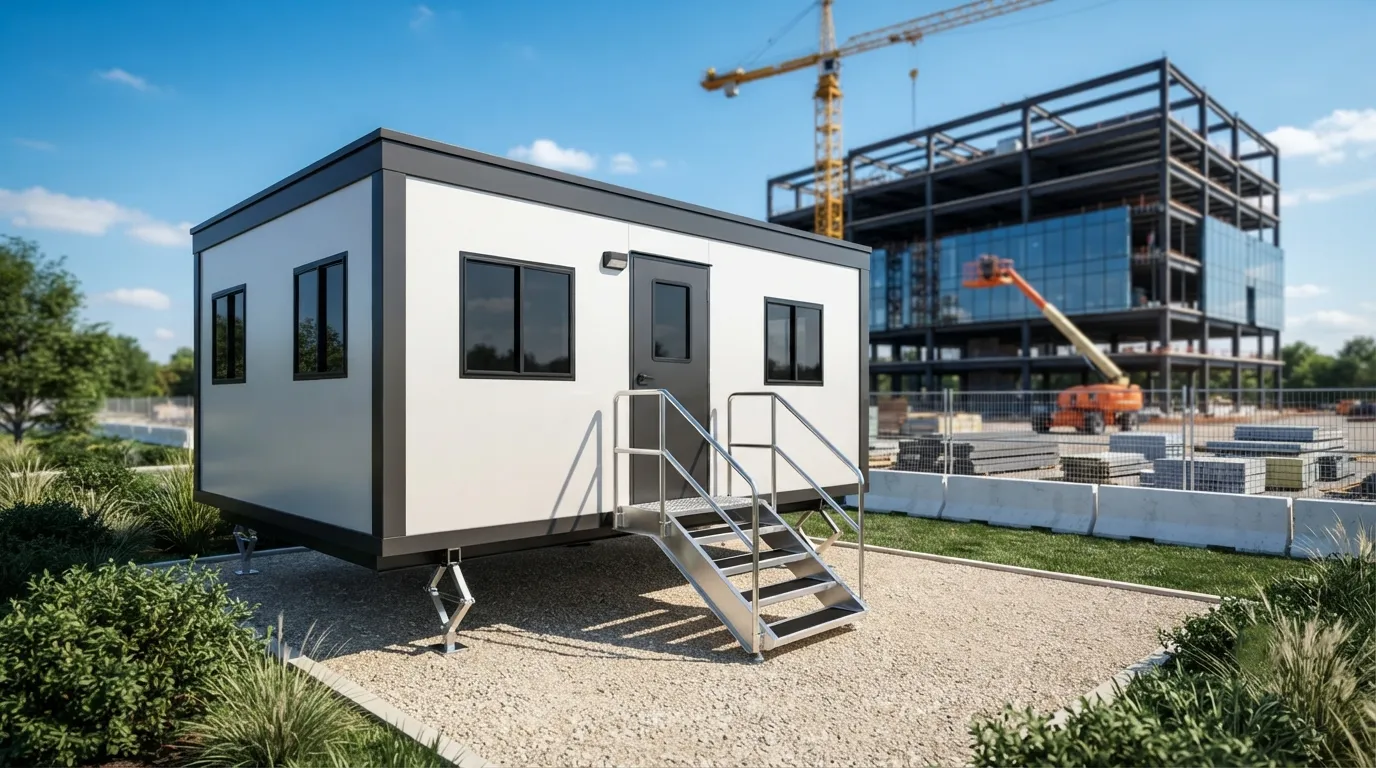
A remodel crew of 25 in Sandy sits in the 21-60 bracket, so 2 units covers the OSHA minimum, though many supervisors add a third once travel time to the unit becomes a factor on a spread-out lot. If your project also needs an ADA accessible porta potty, remember ADA Standards 213.2 requires at least 5 percent of a cluster to be accessible, with a minimum of one unit regardless of cluster size.
Worked Example: 40-Person Framing Crew Over 3 Months
A 40-person crew falls into the 21-60 OSHA bracket, meaning 2 units minimum under 1926.51(c). Add a third if the site spans more than an acre, since walking distance to a single cluster becomes its own productivity drag. Over a 3-month job, renting through the monthly porta potty rental program is usually more practical than renewing week to week, and it's worth comparing against porta potty rental cost benchmarks before signing. If the crew is doing exterior painting mid-project, add a temporary handwash unit for that phase specifically, since OSHA 1926.51(f)(1) applies once paints or coatings are in use. A site this size in Sandy also typically pairs restrooms with a roll-off dumpster rental for framing debris and packaging waste.
Worked Example: 300-Guest Wedding With a 6-Hour Reception
A 300-guest wedding reception running 6 hours with a bar open falls well above the no-alcohol baseline. Using the 1-per-50 starting ratio for 4 hours gets you to 6 units, then the extra 2 hours and alcohol service pushes that toward 8 to 9. Many couples in Sandy split the difference: standard units for general guest use, plus one or two from the deluxe flushable porta potty line near the ceremony area for a nicer first impression. If the venue has limited water hookups, ask about a portable sink rental rather than relying on hand sanitizer alone, since 29 CFR 1910.141(d)(2) requires soap and a drying method, not sanitizer, for handwashing facilities that fall under that standard.
Do I Need to Adjust for ADA Accessibility?
Yes, if you're clustering multiple standard units, ADA Standards 213.2 requires at least one accessible unit, and 5 percent of the total if your cluster is large. An accessible unit needs a 60 inch turning circle inside per ADA Standards 304.3.1, and the approach route needs a minimum 36 inch clear width under ADA Standards 403.5.1. Door openings must clear 32 inches per ADA Standards 404.2.3. For a jobsite or event in Sandy expecting any public foot traffic, not just crew, budgeting one ADA accessible porta potty into your count from the start avoids a scramble later. Full detail lives on the ADA restroom requirements page if you're planning a larger cluster with multiple accessible units.
While you're sizing restrooms, it's worth checking related site needs at the same time. A construction job pulling debris will likely need a 10 yard dumpster rental for a small remodel or a 20 yard dumpster rental for a full gut job; a 10 yard container runs roughly 10 by 8 by 4 feet for its footprint, while a 20 yard unit holds about double that cubic footage. Heavier tear-off jobs often call for a 30 yard dumpster rental, which typically handles several tons of mixed debris, or a 40 yard dumpster rental for large-scale demolition where tonnage capacity matters more than box length. Exact weight limits vary by load type and are covered on the dumpster weight limits page, and permit questions for placing a container on a Sandy street should go through the dumpster permit requirements page since right-of-way placement needs confirming with the city directly.
If your project also needs perimeter control, pair your restroom order with temporary fence rental to keep the site secured overnight, and consider temporary power pole service if you're running lighting or tools without permanent power yet. For anyone comparing options before committing, the porta potty rental checklist walks through unit counts, servicing frequency and accessibility needs in one pass, and the how many porta potties do i need framework here applies whether you're in Sandy, in South Jordan 8.3 miles west, or out toward Herriman 15.7 miles southwest.
How many tons does a 20 yard dumpster hold?
A 20 yard dumpster generally handles a few tons of mixed construction debris, though exact tonnage depends on material density; concrete and shingles weigh far more per yard than framing scraps. Check the dumpster weight limits page before loading heavy material to avoid overage charges.
How many tons does a 30 yard dumpster hold?
A 30 yard dumpster typically holds more tonnage than a 20 yard unit but the ceiling depends heavily on what's inside; dense debris like tile or drywall fills the weight limit long before the box looks full. The 30 yard dumpster rental page has sizing guidance for common job types.
How many cubic feet are in a 10 yard dumpster?
A 10 yard dumpster holds about 270 cubic feet, roughly matching a footprint of 10 by 8 by 4 feet. That's usually enough for a single-room remodel or a small cleanout in Sandy. See 10 yard dumpster rental for load examples.
How many feet is a 20 yard dumpster?
A 20 yard dumpster runs longer and taller than a 10 yard box, roughly doubling the cubic capacity. Confirm exact dimensions on the dumpster sizes and dimensions page before planning driveway or street placement.
Can I mix porta potty rentals with a dumpster order?
Yes, most jobsites in Sandy order both together since a single delivery visit can drop both units. Ask about combined delivery windows when you request a quote; it often simplifies scheduling versus two separate trips.
Should I rent more units than OSHA requires?
Often, yes. The bracket table sets a legal floor, not a comfort standard, and units at the low end of a bracket see heavier lines. Many Sandy contractors add one extra unit past the OSHA minimum once a site exceeds a half-acre footprint.
Next step
Get a delivery date
Tell us the address, the dates and the headcount. We size the order and confirm the route.